
Few things are more frustrating than stepping outside in spring and noticing thin patches or bare spots scattered across your yard. Whether they’re caused by winter damage, pet activity, heavy foot traffic, or soil compaction, bare spots can quickly make an otherwise healthy lawn look neglected.
The good news? Most bare spots are completely fixable — if you address the root cause.
In this guide, we’ll break down the most common reasons lawns develop bare patches and explain the best professional and DIY solutions to restore thick, green turf. If you want long-term results, proper lawn repair combined with strategic lawn care services is key.
What Causes Bare Spots in Your Lawn?
Before jumping into solutions, it’s important to understand why bare spots appear in the first place. Treating the symptom without addressing the underlying issue can lead to repeated problems.
1. Soil Compaction
Compacted soil is one of the most common causes of thinning grass. In Virginia, clay-heavy soil makes lawns especially prone to compaction.
Compaction can result from:
- Heavy foot traffic
- Children or pets playing in the yard
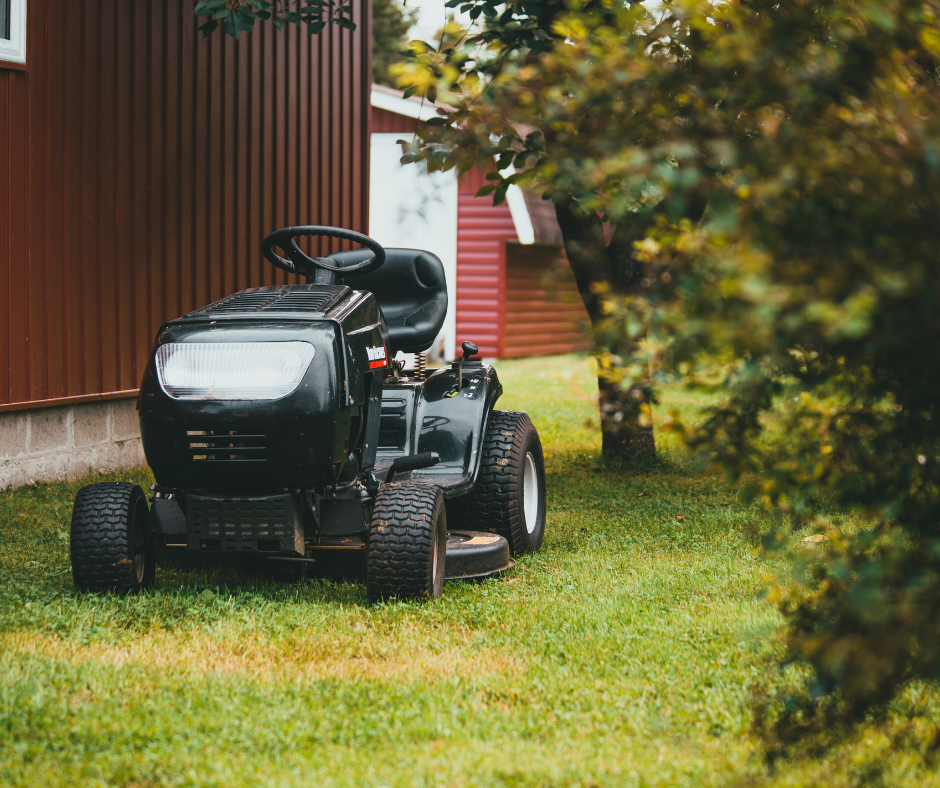
- Lawn equipment
- Construction activity
- Winter snow and ice weight
When soil becomes compacted, roots can’t grow deep. Water and nutrients fail to penetrate, leading to weak or dying grass.
2. Pet Damage
Dog urine contains concentrated nitrogen, which can burn grass and leave behind yellow or brown circular spots. Over time, these areas may turn completely bare.
High-traffic pet areas also compact soil, making regrowth difficult without intervention.
3. Improper Mowing Practices
Cutting grass too short (also known as scalping) weakens the root system and exposes soil to excessive sunlight. This stresses turf and creates thin patches.
Dull mower blades can also tear grass instead of cutting it cleanly, increasing susceptibility to disease.
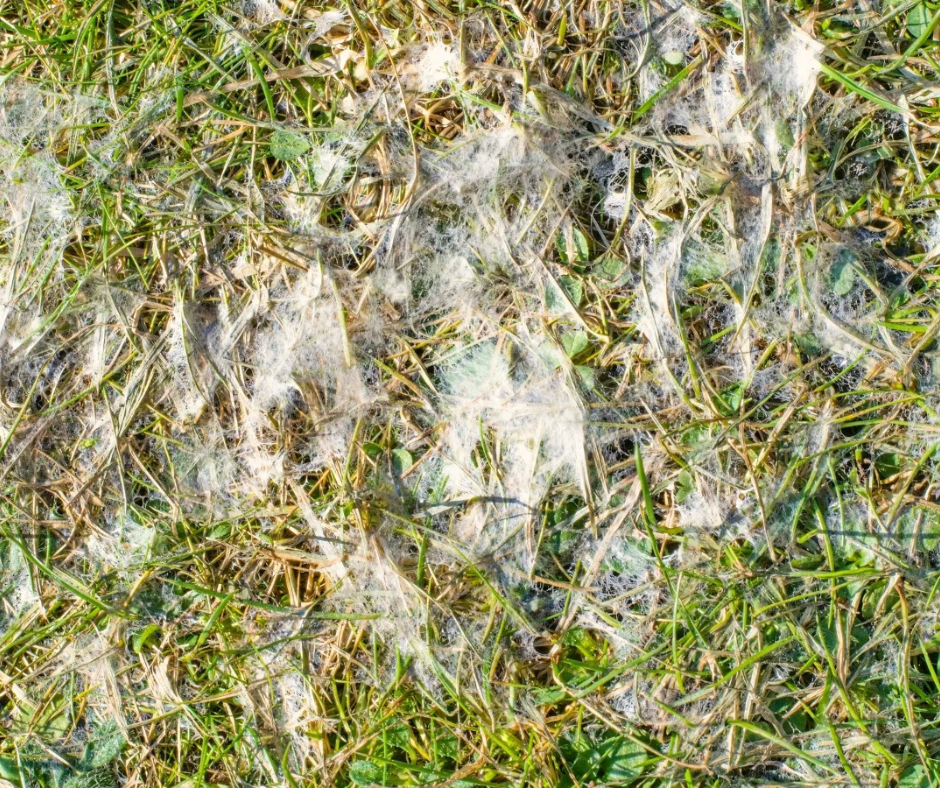
4. Lawn Disease or Fungal Growth
Excess moisture, poor drainage, and thatch buildup can create conditions for fungal diseases such as:
- Brown patch
- Dollar spot
- Snow mold
These diseases often leave irregular bare areas behind once the grass dies off.
5. Poor Soil Quality
Grass needs healthy soil to thrive. Nutrient deficiencies, improper pH levels, and low organic matter can all contribute to sparse growth.
Without proper fertilization and soil management, bare spots are likely to reappear.
6. Shade and Tree Competition
Areas under trees often struggle due to:
- Limited sunlight
- Root competition for nutrients
- Dry soil conditions
Certain grass varieties simply cannot thrive in deep shade without specialized seed blends.

How to Fix Bare Spots in Your Yard
Now that you understand the causes, let’s discuss effective lawn repair solutions.
Step 1: Identify and Correct the Underlying Issue
Before reseeding, determine what caused the damage.
For example:
- Compacted soil → Requires aeration
- Pet damage → Requires soil flushing and repair
- Disease → Requires proper treatment
- Shade → May require shade-tolerant seed
Without addressing the root problem, new grass may fail again.
Step 2: Loosen the Soil
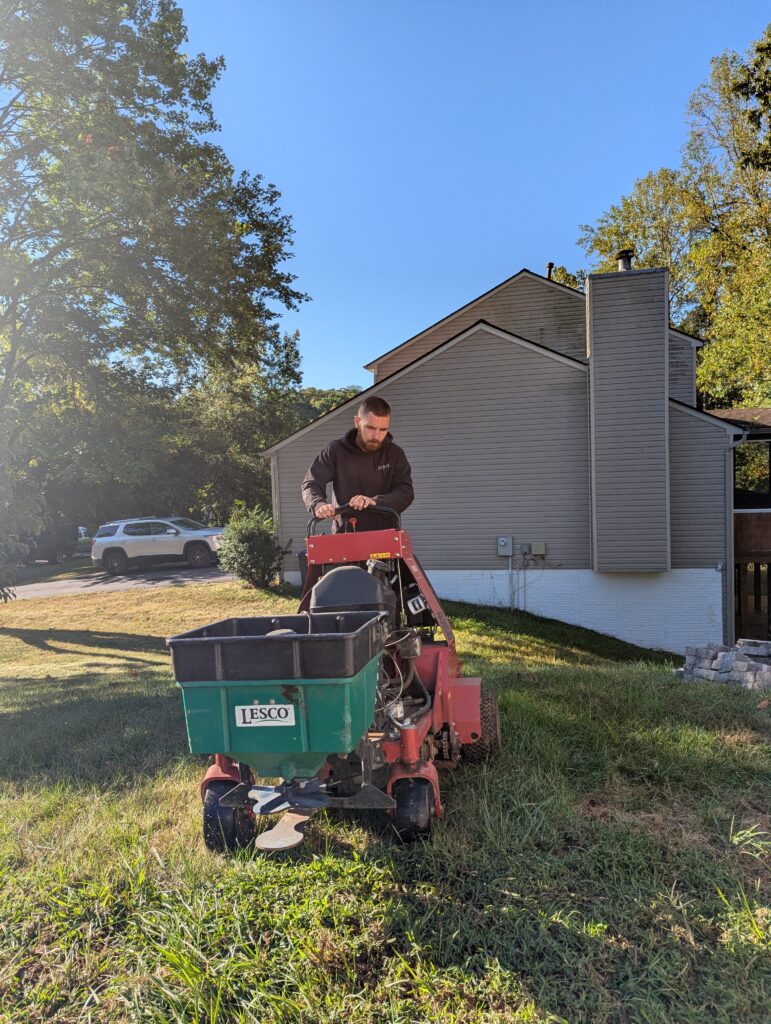
Healthy grass roots need oxygen and space to grow.
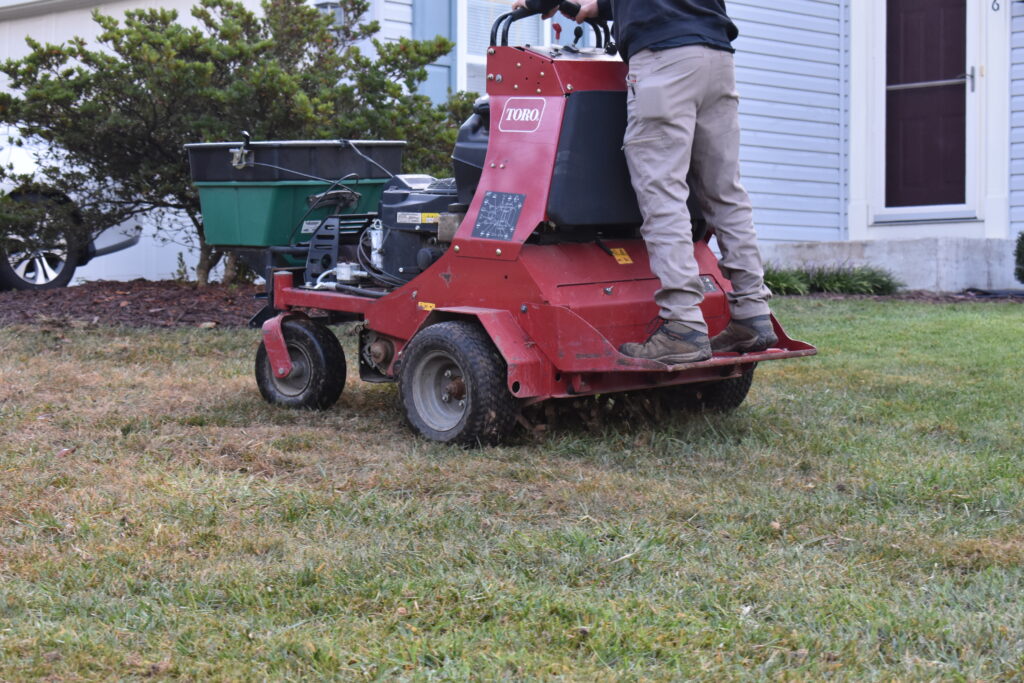
For small areas, use a garden rake to break up compacted soil. For larger lawns, professional core aeration is often the most effective solution.
Core aeration:
- Relieves soil compaction
- Improves drainage
- Increases nutrient absorption
- Enhances seed-to-soil contact
Aeration significantly increases the success rate of overseeding.
Step 3: Add Topsoil or Compost (If Needed)
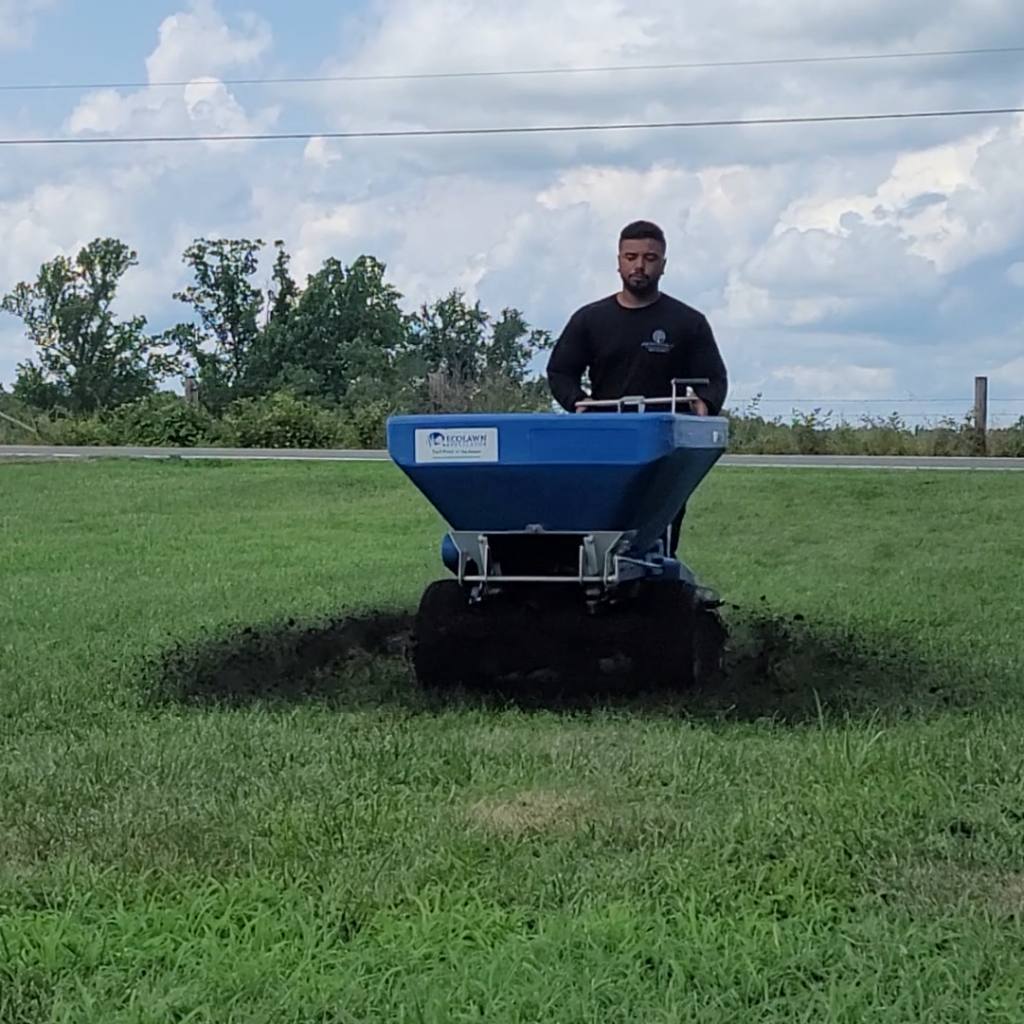
If the soil is thin, eroded, or poor quality, adding a thin layer of screened topsoil or compost can improve growing conditions.
This step helps:
- Improve soil structure
- Increase organic matter
- Enhance seed germination
Avoid applying thick layers that can smother surrounding grass.
Step 4: Overseed the Bare Area
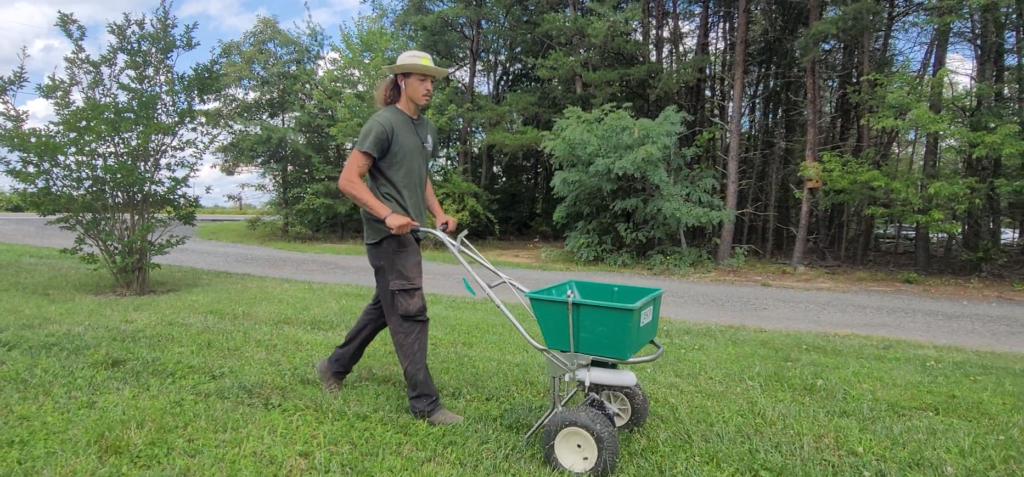
Overseeding is one of the most effective lawn repair methods.
To properly overseed bare spots:
- Choose a high-quality seed blend suitable for Virginia’s climate.
- Spread seed evenly across the prepared area.
- Lightly rake to ensure good soil contact.
- Water consistently until germination occurs.
For best results, overseeding is often combined with professional lawn aeration.
Step 5: Apply Starter Fertilizer
New grass seedlings need nutrients to establish strong roots.
A balanced starter fertilizer promotes:
- Faster germination
- Root development
- Strong early growth
Be careful not to over-fertilize, as this can damage young grass.
Professional lawn care providers calculate proper application rates to prevent burn.
Step 6: Maintain Proper Watering
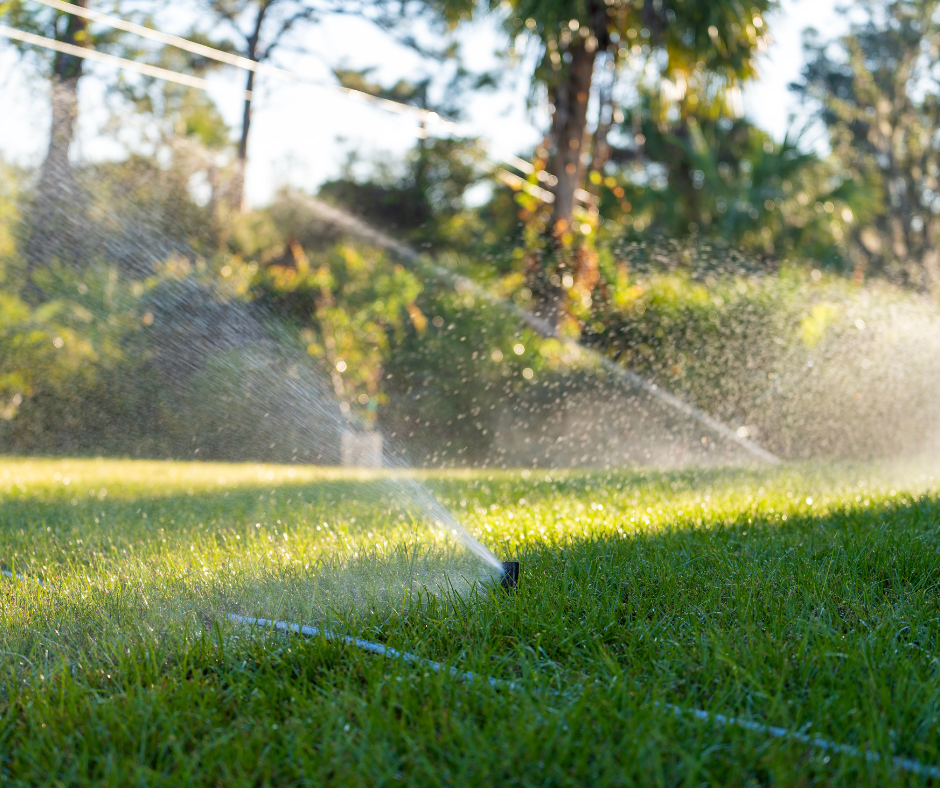
Consistent moisture is critical during the first few weeks after seeding.
- Keep soil lightly moist (not soaked)
- Water once or twice daily in small amounts
- Reduce frequency as grass establishes
Overwatering can cause fungal issues, while underwatering can prevent germination.
Step 7: Adjust Mowing Practices
Once new grass reaches about 3 inches tall, you can begin mowing.
Remember:
- Never cut more than one-third of the blade height
- Keep mower blades sharp
- Avoid mowing when grass is wet
Proper mowing encourages thick turf growth.
When Professional Lawn Repair Is the Better Option
While small bare patches can sometimes be repaired by homeowners, larger or recurring issues often require professional attention.
Professional lawn repair services provide:
- Soil testing and analysis
- Commercial-grade aeration equipment
- High-quality seed blends
- Precise fertilizer application
- Weed control integration
- Long-term lawn health planning
If your yard has widespread thinning or chronic bare spots, a customized lawn restoration plan may be necessary.
The Best Time to Repair Bare Spots
Timing plays a major role in successful lawn repair.
In Virginia, ideal times for overseeding and lawn repair are:
- Early fall (best for cool-season grasses)
- Early to mid-spring
Fall is typically optimal because soil temperatures remain warm while air temperatures cool — creating ideal germination conditions.
However, spring lawn repair can still be highly effective when paired with proper watering and weed control.
Preventing Bare Spots in the Future
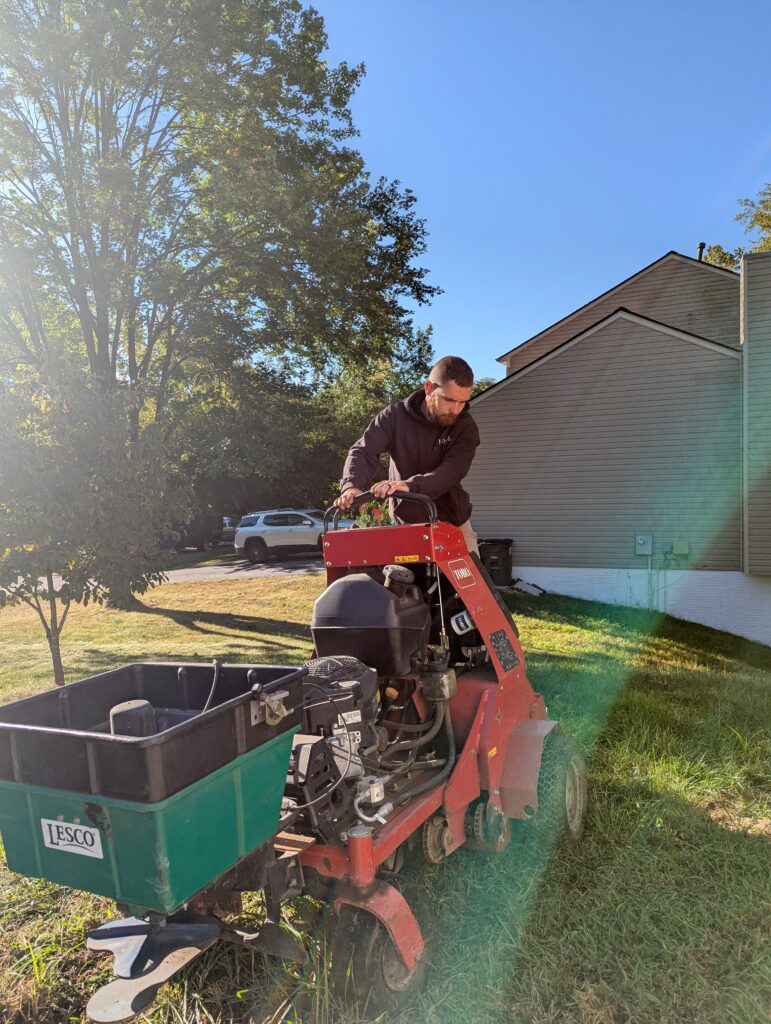
Once your lawn is repaired, ongoing maintenance prevents repeat problems.
Key preventive steps include:
- Annual core aeration
- Consistent fertilization
- Pre-emergent weed control
- Proper mowing height
- Seasonal overseeding
- Managing foot traffic
- Improving drainage
A proactive lawn care plan is far more effective than reactive repairs.
Why Choose Lewis Enterprises for Lawn Repair?
At Lewis Enterprises, we specialize in comprehensive lawn care services designed to strengthen turf from the ground up.
Our services include:
- Lawn aeration
- Overseeding
- Fertilization programs
- Weed control
- Spring and fall cleanups
- Full-service lawn maintenance
We understand the soil conditions and climate challenges unique to Virginia. Our team develops customized lawn repair strategies that produce thick, green, long-lasting results.
Bare spots don’t have to define your yard. With the right approach, your lawn can recover beautifully.
Restore Your Lawn Today
If you’re tired of patchy grass and recurring bare spots, it’s time for a professional solution.
Call 540-903-8978
Email [email protected]
Visit lewisenterprisesva.com/contact/ to schedule your service.
Lewis Enterprises is ready to help you repair and revitalize your lawn with expert lawn aeration, overseeding, and lawn care services tailored to your property.